
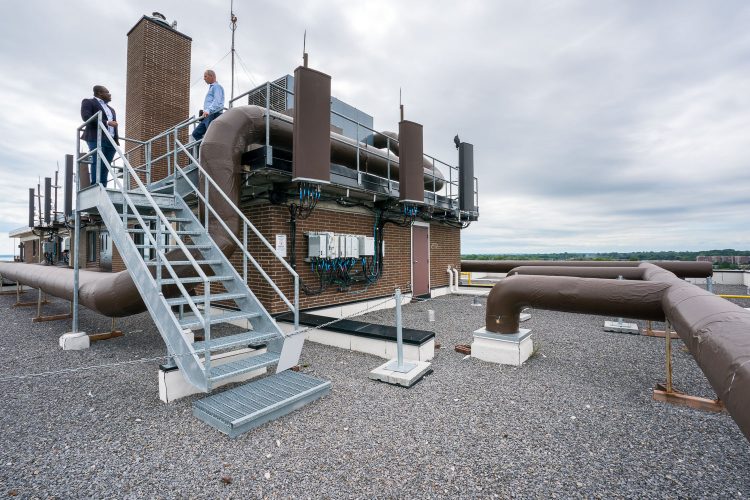



Building mechanical equipment includes systems for heating, ventilation, air conditioning, cooling, pumping, and automation. Understanding their role helps managers optimize energy performance, reduce operating costs, and ensure occupant comfort in commercial and industrial buildings. In this article, discover the main HVAC equipment.
The 5 pillars of building mechanical equipment
Rooftop units, unit heaters, cooling towers, industrial pumps… These terms are part of everyday building mechanics, but they often remain unclear for managers and decision-makers. Yet, understanding this equipment is essential to make better decisions, optimize performance, and avoid unnecessary costs.
In a context where Québec buildings must deal with harsh climate conditions and increasing pressure on energy costs, understanding your equipment becomes a strategic advantage.
This guide is designed to give you a clear and structured overview of the main HVAC equipment to help you better understand their role and improve discussions with your BAULNE technician.
Before diving into details, equipment can be grouped into 5 main categories:
- Commercial and industrial heating
- Ventilation and indoor air quality
- Air conditioning
- Building mechanical systems
- Automation and smart building systems
Each pillar includes several essential technologies for proper building operation.
Main HVAC equipment
Rooftop units (RTUs)
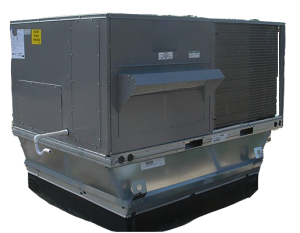
Also called rooftop units, these are among the most versatile systems. Installed on the roof, they maximize indoor space. They are ideal for heating, ventilating, and air conditioning commercial or industrial buildings. Some advanced units also control humidity levels.
Higher-end units integrate advanced technologies such as sensors, intelligent software, and building automation systems. These allow technicians to receive alerts and quickly identify and resolve issues.
Their decentralized design allows maintenance (like filter replacement) without shutting down the entire system.
Unit heaters

Powered by natural gas or electricity, these systems are effective for heating specific zones or hard-to-reach areas.
They work by pushing air through a heat exchanger using a fan, warming the air before distributing it to the desired space.
They are known for fast heating and targeted efficiency.
Radiant heaters
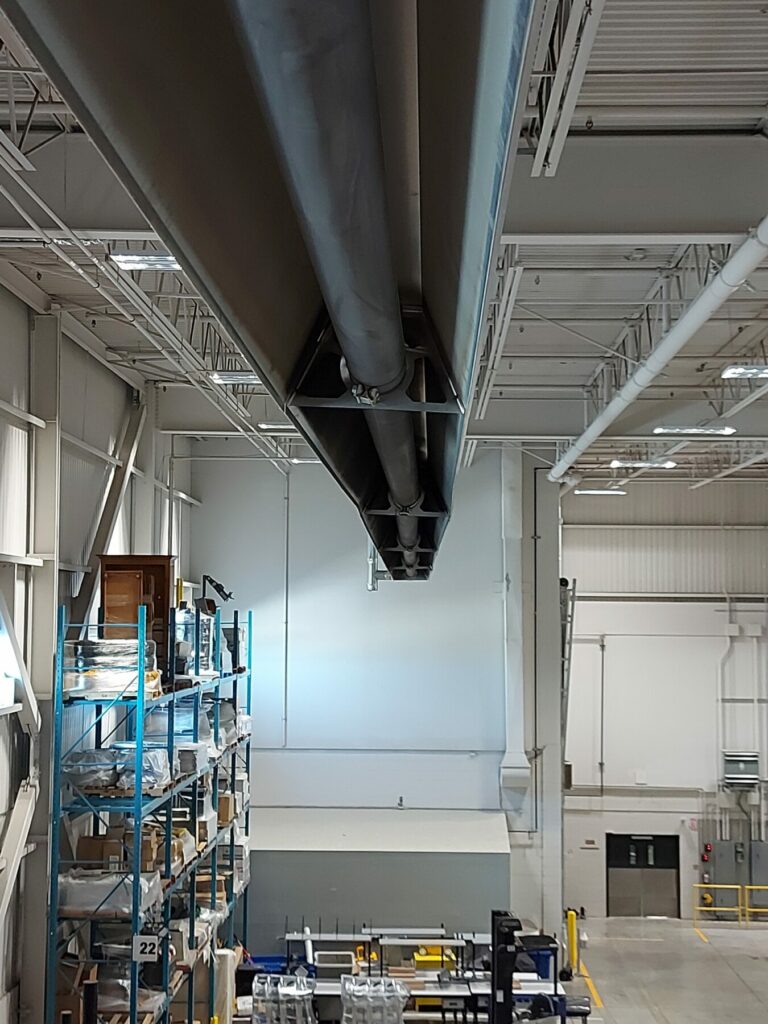
Radiant heaters emit heat through radiation, warming objects and people directly instead of heating the air.
This method is often more energy-efficient and is commonly used in open or hard-to-heat spaces such as warehouses or outdoor terraces.
Heat exchangers
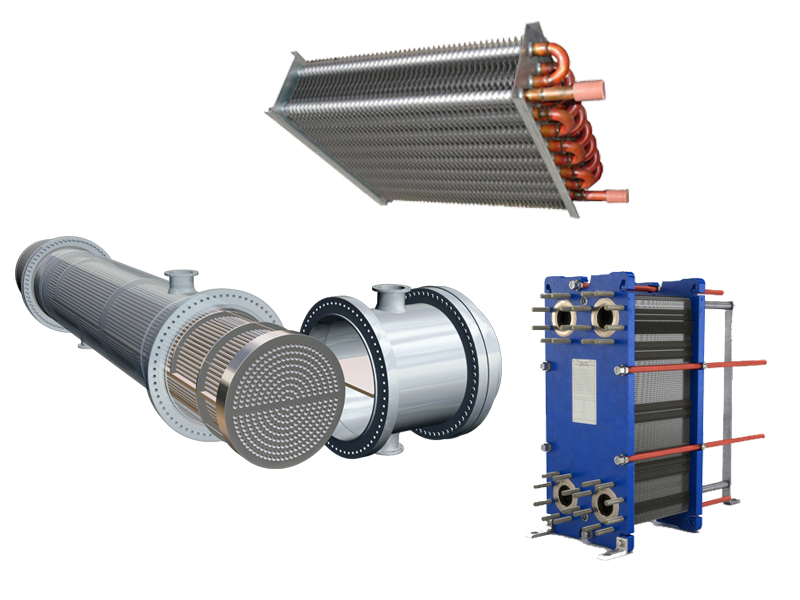
A heat exchanger is a relatively simple system that enables thermal transfer between a hot fluid and a cold fluid without direct contact. Its main objective is to recover thermal energy in order to reduce the energy costs of a process or system.
For example, a plant generating hot effluent can recover this heat to preheat water used in its operations, thereby improving energy efficiency.
There are several types of heat exchangers, including:
- Shell and tube heat exchangers
- Coil heat exchangers
- Spiral heat exchangers
- Plate heat exchangers
To learn more, you can visit our dedicated heat exchanger page.
Ventilation systems
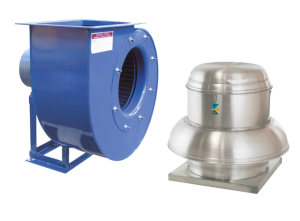
The ventilation system includes ducts, fans, air exchangers, make-up air units, centrifugal and axial industrial fans, custom ductwork, air handling units, heat recovery systems, and filtration systems.
In short, it represents the “lungs” of your building. It brings in fresh air, filters it to remove airborne particles, and exhausts stale air.
An efficient ventilation system directly contributes to occupant health and safety while optimizing energy costs.
You can visit our dedicated ventilation page to learn more about its role in a building.
Water or Air-Cooled Units
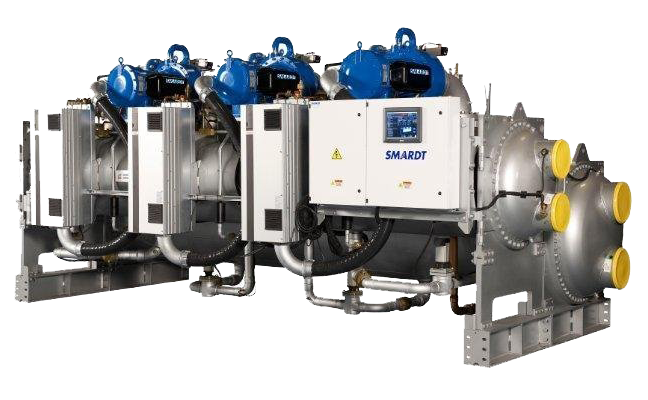
Cooling units are commonly used in commercial and industrial facilities.
Water-based systems operate by cooling water in a closed loop. This chilled water then circulates through a network of pipes to absorb heat from the air. These units are typically paired with a cooling tower and integrated into more complex systems.
Air-based units, on the other hand, use a fan to circulate air through a network of refrigerant lines, allowing heat from indoor air to be expelled outside the building.
These systems play a critical role in maintaining stable and efficient temperature conditions.
Cooling Towers
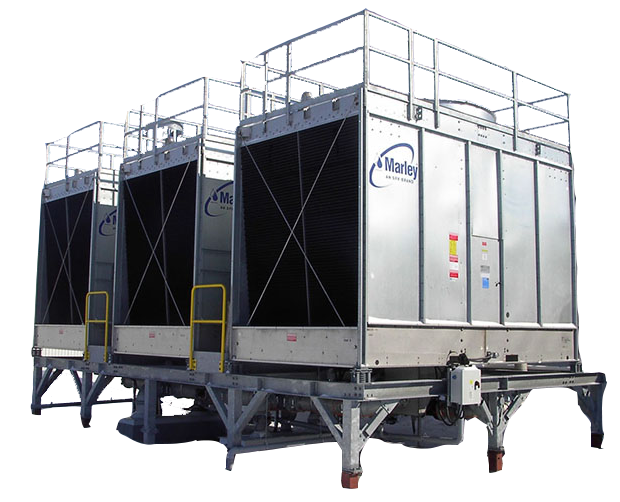
A cooling tower (also known as a water cooling tower) removes heat through contact between water and ambient air.
Hot water from a process or system is dispersed into fine droplets over a heat exchange surface. This surface allows the water to flow down into a collection basin. At the same time, air is blown in the opposite direction of the droplets, promoting heat transfer to the surrounding air.
The cooled water is then collected and recirculated back into the process or system, ensuring a continuous and efficient cooling cycle.
Boilers
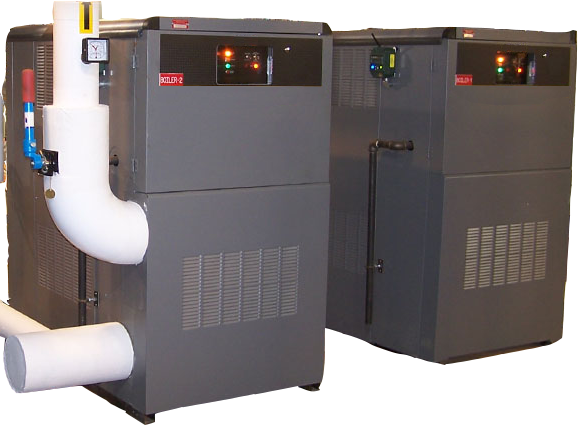
Boilers are used to produce hot water or steam to supply various building systems or certain industrial processes. They are typically powered by natural gas or electricity.
As pressurized equipment, they must be operated and maintained with great care. Their operation is governed by strict regulations, and control parameters as well as maintenance requirements which vary depending on the burner capacity.
Proper monitoring is essential to ensure the safety, performance, and longevity of these systems.
Dehumidification System
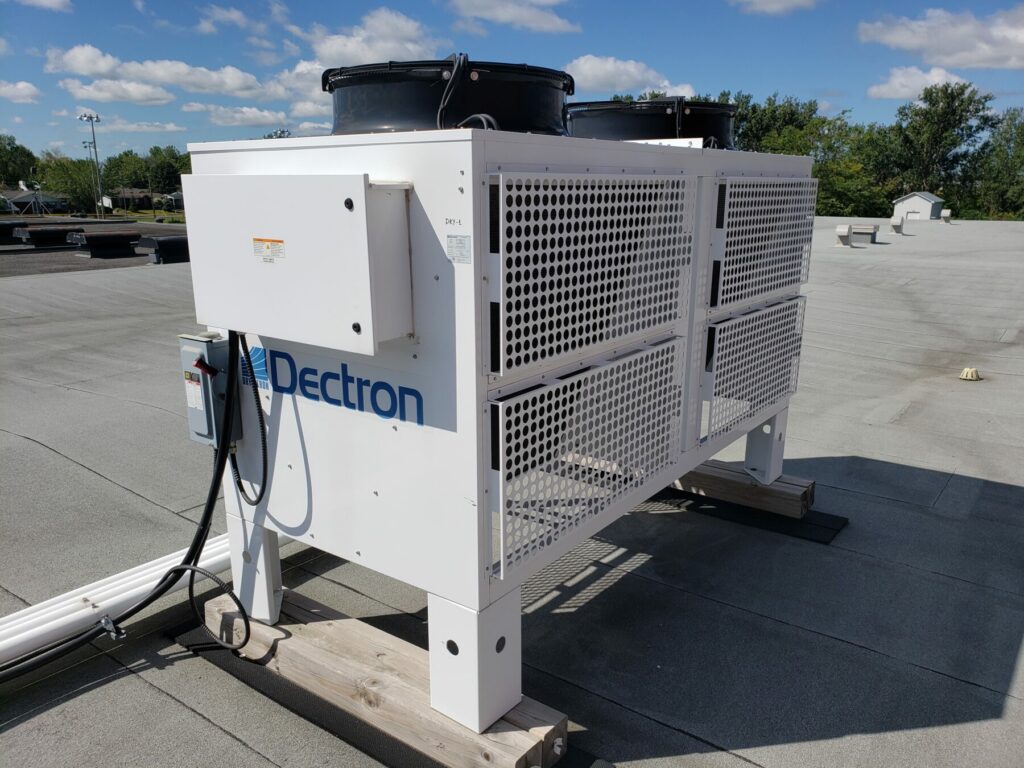
This type of system is commonly installed in buildings with indoor pools. The unit captures warm, humid air and condenses it to reduce humidity levels. The recovered heat can then be reused—particularly to heat the pool water—resulting in significant energy savings.
Feel free to visit BAULNE’s website to explore all our services and discover additional practical tips to help optimize the performance of your systems.
Pumps
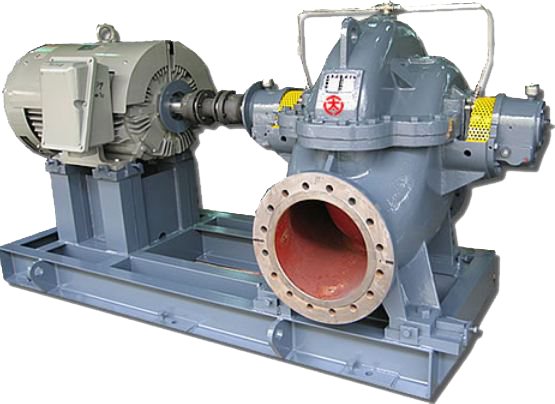
Industrial and commercial pumps are classified based on their application and capacity. There are two main categories:
Centrifugal pumps
These operate using the centrifugal force generated by a rotating impeller. Different flow types include:
- Radial flow: pressure is entirely generated by centrifugal force
- Mixed flow: pressure is generated by both centrifugal force and the angle of the blades
- Axial flow: pressure mainly comes from the propelling action of the blades on the fluid
Positive displacement pumps
These pumps operate by moving a fixed volume of fluid. They feature an expanding cavity on the suction side and a decreasing cavity on the discharge side. A precise volume of liquid is captured, then transferred and expelled at the outlet.
This mechanism ensures a constant and controlled transfer of fluid between the inlet and outlet, making them particularly suitable for applications requiring precision and stability.
Summary Table of HVAC Equipment
| Equipment | Main Function | Key Advantage | Application |
| Rooftop Unit | Heating, ventilation, air conditioning | Versatility & space-saving | Commercial buildings |
| Unit Heater | Targeted heating | Easy installation | Specific zones |
| Radiant Heater | Radiant heating | High efficiency | Open spaces |
| Heat Exchanger | Heat recovery | Cost reduction | Industrial |
| Ventilation | Air quality | Health + energy efficiency | All buildings |
| Chiller | Heat removal | Thermal performance | Commercial/industrial |
| Cooling Tower | Water/air cooling | High capacity | Complex systems |
| Boiler | Hot water/steam production | Reliability | Industrial processes |
| Dehumidification | Humidity control | Comfort + savings | Pools, sports centers |
| Pump | Fluid circulation | System performance | All HVAC systems |
Conclusion: Better Understanding for Better Performance
Understanding building mechanical equipment is not just a technical matter—it’s a strategic decision.
Each piece of equipment plays a specific role in your building’s overall performance. When properly understood, maintained, and integrated, they help to:
- reduce operating costs
- improve energy performance
- extend the lifespan of installations
- ensure occupant comfort and safety
Most importantly, this understanding allows you to shift from reactive to proactive management.
At BAULNE, we believe that simplifying complexity is the key. That’s why we support managers and businesses with a clear, structured approach tailored to real-world conditions.
Whether you’re looking to optimize your equipment, modernize your systems, or better understand your infrastructure, our team is here to guide you every step of the way.
About BAULNE
BAULNE – A local company, leader in building mechanics.
For over 20 years, BAULNE has been simplifying HVAC management for business clients through intelligent solutions that reduce operating costs while improving comfort and productivity.
Our motto:Caring for people and buildings
Learn more →
Discover more insights in our Articles Section.